
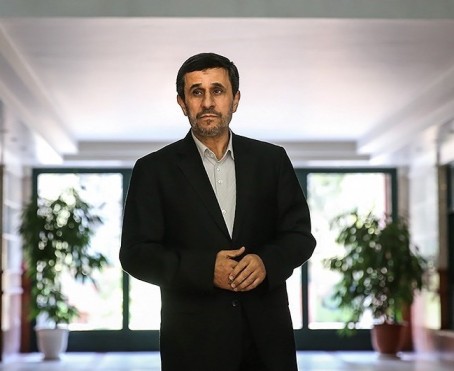
Recent claims have sparked fresh inquiries into the US and Israeli intentions to unseat the Iranian regime, following allegations that Israel sought to empower populist Mahmoud Ahmadinejad. Ahmadinejad’s presidency, spanning from 2005 to 2013, was characterized by aggressive rhetoric towards Israel. However, after clashing with Supreme Leader Ali Khamenei, he repositioned himself as a regime critic and advocate for the impoverished. Reports suggest that Israel bombed a security installation near his Tehran residence to facilitate his escape from house arrest, though Ahmadinejad reportedly grew uneasy about the operation. While the plans were viewed as improbable or as potential disinformation from Ahmadinejad’s supporters or Israeli intelligence, the incident underscores the US and Israel’s overestimation of regime opposition and their capacity to effectuate regime change through airstrikes.
President Donald Trump, confronting domestic discontent over increasing gas prices, has sought to distance himself from the ongoing conflict but is contemplating additional airstrikes to compel Tehran to comply with his stipulations. On Monday, Trump indicated a delay in launching a new attack following intervention by Gulf leaders. However, a subsequent extensive phone conversation with Israeli Prime Minister Benjamin Netanyahu on Tuesday addressed the potential resumption of hostilities. When queried about Israel’s potential actions against Iran, Trump remarked, “Netanyahu will do whatever I want him to do. He’s a great guy. To me, he is a great guy.” Trump expressed a desire to see the Strait of Hormuz reopened, denying any urgency or political pressure related to the midterm elections.
Tehran remains steadfast in its stance, refusing to meet Washington’s demands regarding domestic uranium enrichment, instead aiming to postpone discussions on its nuclear program while seeking the cessation of sanctions in exchange for ending its blockade of the Strait of Hormuz. In response, the US has imposed a counter-blockade on Iran’s ports to impede its oil exports, primarily destined for China, Iran’s largest export market. The Islamic Revolutionary Guard Corps has threatened to expand the conflict beyond the region should Trump resume military assaults. Meanwhile, Iranian media has treated the report of Israeli involvement with skepticism, asserting that Ahmadinejad was not under house arrest at the time.
Initial reports during the Israeli attacks on Tehran suggested Ahmadinejad had perished in a strike on his residence. However, it was later clarified that a security outpost near his home in Narmak, northeast Tehran, had been targeted, as confirmed by satellite imagery. Speculation arose that Ahmadinejad might leverage the chaos to regain power. In the aftermath of the airstrikes, official accounts indicated he sustained minor injuries while his bodyguards were killed. Despite the turbulent history with Israel, Ahmadinejad would be an improbable ally for Netanyahu due to his Holocaust denial and anti-Israeli stance.
Trump’s strategy at the onset of the Iranian attacks mirrored the US approach in Venezuela, where troops captured leader Nicolás Maduro, though the regime remained in place. However, Ahmadinejad’s strained relations with Tehran’s regime make a similar arrangement unlikely. Ahmadinejad’s influence waned significantly after breaking with Khamenei in 2011, further diminishing with the election of his rival, Ali Larijani, as parliamentary speaker. His subsequent arrest in 2018 followed criticism of his successor Hassan Rouhani’s government. Although he was barred from running for president again, including in 2024, Ahmadinejad has mostly remained silent, issuing only mild criticism of Israeli strikes on Iran in 2025. Notably, he visited pro-Israel Hungary for a talk last June, one of his few international trips since leaving office, an indication of evolving views.