
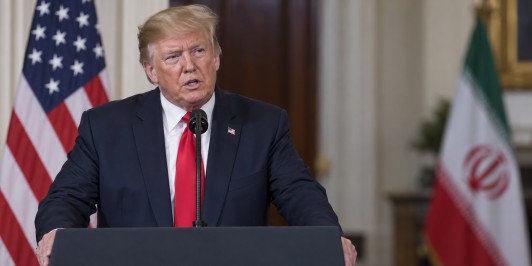
The ongoing tensions between the United States and Iran have significant implications for regional security and global energy supplies, as President Donald Trump addressed in his recent speech at the United Nations General Assembly. The conflict has heightened uncertainty around the Strait of Hormuz, a critical passage for oil shipments, potentially affecting worldwide energy markets and regional stability.
During his 37-minute address in New York, President Trump outlined a stark choice: negotiating a deal with Iran or escalating military actions. He suggested that a potential agreement could be reached after the upcoming US midterm elections in November. Despite previous opportunities for dialogue, Trump claimed Iran’s unwillingness to engage had led to increased military tensions.
The President urged the international community to bolster economic pressure on Tehran, criticizing Iran for actions that disrupt shipping routes through the Strait of Hormuz. This critical waterway is pivotal for the transport of a significant portion of the world’s oil, and disruptions there could have widespread economic repercussions.
In his remarks, Trump also took aim at the International Criminal Court, urging member states to withdraw from the institution. He emphasized that the United States would not support international proceedings that involve its military personnel, marking a continued stance against global judicial oversight.
Additionally, Trump highlighted the ongoing ceasefire and rebuilding efforts in Gaza, as discussions at the UN focused on broader Middle East conflicts and other global crises. These developments underscore the complex and multifaceted nature of international relations and the challenges facing global leaders in addressing them.