
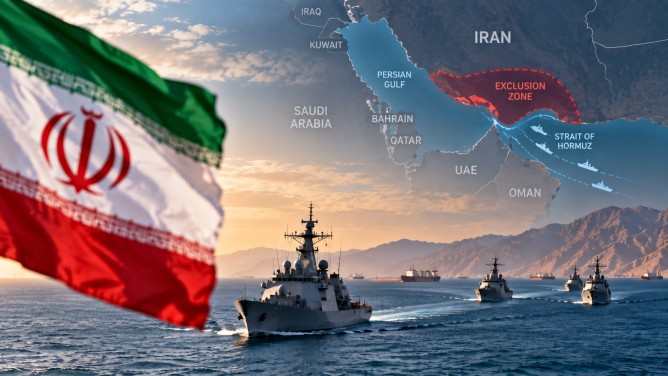
In a significant development amid ongoing regional tensions, Iran has announced its intention to create a new “exclusion zone” near the Strait of Hormuz. This move is aimed at targeting vessels deemed to be attempting passage through this strategically crucial waterway. Mohsen Rezaei, who recently took over as the head of Iran’s Supreme National Security Council, outlined that the proposed zone would stretch from the U.S. naval blockade area towards the Strait of Hormuz and into the Arabian Gulf. Vessels identified within this zone and deemed to be trying to cross the strait may find themselves placed on an Iranian sanctions list, according to Rezaei.
This announcement comes on the heels of heightened conflict, marked by a U.S. military strike on three Iranian oil tankers. The strike was a response to Iran’s launch of ballistic missiles targeting U.S. warships. Furthermore, Iran has claimed responsibility for striking an unmanned U.S. vessel that was allegedly attempting to enter the strait, though this claim has been dismissed by the U.S. military. The Strait of Hormuz is a vital conduit for global oil and gas supplies, and any disruptions in this area have the potential to impact energy prices and global economic stability significantly.
The United States has responded to these developments by deploying naval forces to enforce a blockade of Iranian ports, aiming to curb Tehran’s oil exports. This military action is part of a broader strategy that includes increased economic sanctions following the breakdown of diplomatic negotiations between the two nations. Despite these pressures, Iran’s Rezaei emphasized the country’s commitment to pursuing diplomatic solutions, albeit with demands for stronger guarantees in any future agreements. Currently, talks between Washington and Tehran remain at a standstill, with both sides continuing to accuse each other of treaty violations.
Amid these escalating tensions, U.S. officials report that a substantial volume of oil is still being transported through the Strait of Hormuz. This continued flow is facilitated by naval protection measures and supplemented by alternative regional pipelines. The situation remains fluid, with the potential for further developments as both countries navigate this complex and high-stakes geopolitical landscape.