
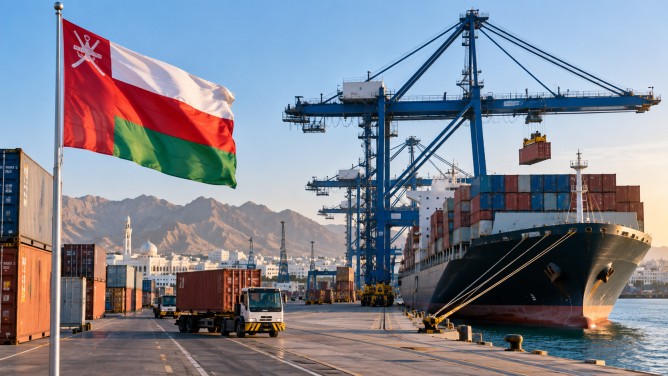
In the first half of 2026, Oman achieved a significant trade surplus of approximately OMR4.7 billion, marking a notable 51% increase compared to the same period in the previous year when the surplus was OMR3.1 billion. This growth is reflected in the latest official data, which highlights a robust performance in the country’s trade activities.
Merchandise exports experienced a 15.3% rise, reaching about OMR13.2 billion by the end of June. This surge was primarily fueled by a stronger performance in oil and gas exports, which themselves saw a 16.5% increase in value, totaling OMR8.6 billion, up from OMR7.4 billion a year prior. In addition to oil and gas, non-oil exports also demonstrated growth, increasing by 11.4% to roughly OMR3.6 billion. Meanwhile, re-export activities expanded significantly as well, climbing 20% to reach OMR978 million.
On the import front, merchandise imports showed a modest rise of 2.1%, amounting to OMR8.6 billion. The United Arab Emirates emerged as the leading destination for Oman’s non-oil exports, receiving goods valued at OMR1.134 billion. Closely following were Saudi Arabia and India, with non-oil exports valued at OMR357 million and OMR333 million, respectively.
Re-exports saw Iran as the primary destination, receiving OMR254 million worth of goods. The United Arab Emirates and Saudi Arabia were also significant recipients, with OMR221 million and OMR188 million, respectively, in re-exported goods from Oman. This highlights the strategic trade relations Oman maintains with its regional partners.
As for imports, the UAE stood out as Oman’s largest trading partner, supplying goods worth OMR2.423 billion. China and Türkiye followed as key import sources, contributing OMR1.194 billion and OMR676 million, respectively. This trading dynamic underscores the UAE’s pivotal role in Oman’s import activities, complemented by significant trade interactions with China and Türkiye.