
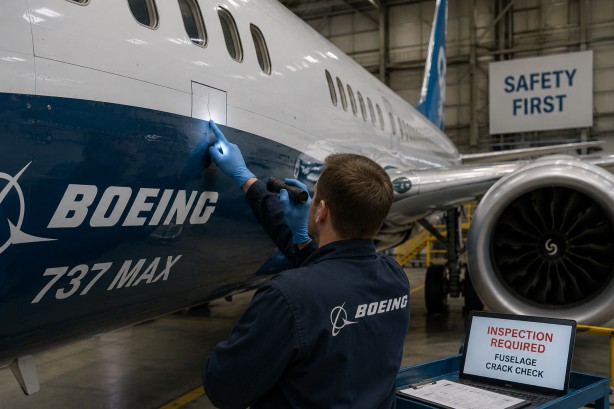
The Federal Aviation Administration (FAA) has mandated that operators of Boeing 737 Max aircraft conduct inspections for potential cracks in a crucial component of the fuselage. This directive will impact approximately 471 airplanes, with inspections slated to commence in September. The component under scrutiny is the bear strap, which is composed of structural sheets that reinforce the fuselage around the exit doors. This move follows the discovery of similar cracks in older models of the Boeing 737 Next Generation series, which led to inspections of those aircraft.
Although there have been no reported instances of cracks in the 737 Max series to date, the FAA highlighted that the aircraft shares a design and manufacturing process similar to the Next Generation models. This similarity raises the possibility of the same structural issue occurring in the Max series. The FAA emphasized the potential risks, noting that undetected cracks could compromise a significant structural component, thereby affecting the aircraft’s overall integrity.
Boeing has asserted its commitment to working alongside airlines since the issue was first identified in 2019. The company endorses the mandatory inspections, stating that these checks are intended to detect and address any problems before they escalate to critical levels. This proactive approach aims to ensure continued safety and reliability in the operation of the 737 Max aircraft.
The inspections come amid ongoing scrutiny of the 737 Max model, which has faced significant attention following previous safety concerns. The aircraft type was globally grounded after two tragic crashes occurred in 2018 and 2019. These incidents prompted widespread examination of Boeing’s manufacturing and engineering practices, leading to enhanced measures to ensure safety.