
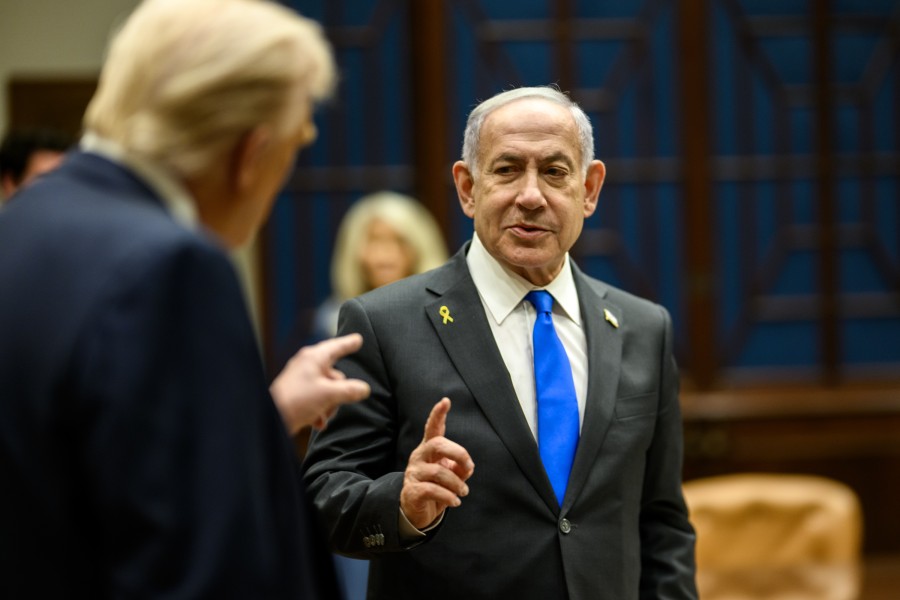
In a notable address to reserve combat officers in the Gush Etzion settlement bloc, Israeli Prime Minister Benjamin Netanyahu advocated for Israel to strengthen its domestic weapons production and reduce its military reliance on the United States. Netanyahu emphasized that ensuring long-term security necessitates cultivating a self-sufficient defense manufacturing system capable of meeting Israel’s military needs independently. While appreciating the historic support from the United States, he underscored the importance of Israel bolstering its own military strength, technological advancements, and leadership capabilities.
Netanyahu’s comments come amidst ongoing discussions between Washington and Jerusalem regarding a new 10-year security cooperation framework. This initiative aims to transition the relationship from being primarily aid-focused to one characterized by mutual partnership. The prime minister’s remarks also reflect growing concerns about Israel’s potential marginalization in recent diplomatic engagements between the United States and Iran, particularly following a memorandum of understanding between Washington and Tehran aimed at ending hostilities and averting renewed conflict.
The agreement between the US and Iran includes provisions impacting various regional issues, notably in Lebanon, where Israeli forces are engaged in operations against Hezbollah. Iran has reportedly called for an Israeli withdrawal from Lebanese territory, a demand Israel has rejected, insisting on the removal of security threats first. This development has highlighted tensions concerning the extent of US influence over Israeli military decisions, with US President Donald Trump alluding to Washington’s substantial leverage due to the close alliance with Israel.
Within Israel, some officials have expressed criticism of the US-Iran understanding, contending that essential goals like dismantling Iran’s nuclear and ballistic missile capabilities remain unfulfilled. Despite these concerns, the United States has reiterated its commitment to preventing Iran from acquiring nuclear weapons, maintaining the option of renewed action should negotiations stall. US Vice President JD Vance has defended the agreement, pointing to the significant military support provided to Israel and emphasizing the strategic partnership’s importance for both nations.